Why Study Medicine in Georgia?
Georgia is rapidly emerging as a preferred destination for international students, especially for those aiming to pursue a medical degree. The country is known for its high-quality education system, affordable tuition fees, and globally recognised medical universities, making it an attractive choice for students worldwide.
1. Globally Recognised Medical Degrees
Medical degrees from Georgia are recognised by major international organisations such as the World Health Organization (WHO), Educational Commission for Foreign Medical Graduates (ECFMG), and other global medical councils. This recognition allows graduates to practise medicine internationally, including in India, after clearing the required licensing exams like FMGE/NExT.
2. Affordable Tuition and Living Costs
One of the biggest advantages of studying medicine in Georgia is its affordability. Compared to countries like the USA, UK, or Australia, tuition fees in Georgia are significantly lower while still maintaining high educational standards.
The cost of living in Georgia is also quite economical, allowing students to manage accommodation, food, and daily expenses comfortably.
Additionally, Georgian medical universities do not require donation or capitation fees, making it a budget-friendly option for students.
3. English as the Medium of Instruction
Medical universities in Georgia offer MBBS/MD programs fully in English, making it convenient for international students.
This eliminates language barriers and allows students to focus entirely on academics and clinical training without needing to learn Georgian.
4. Hands-On Practical Experience
Georgian medical universities place strong emphasis on practical training alongside theoretical education. Students gain hands-on clinical exposure through university-affiliated hospitals, where they interact with patients and apply their knowledge in real-world medical settings. This experience helps develop essential clinical and diagnostic skills required in the healthcare field.
Medical institutions in Georgia are equipped with modern laboratories and advanced teaching facilities, ensuring students are trained using the latest medical technologies and practices.
5. Compliance with International Medical Standards
Medical universities in Georgia follow global medical education standards and are aligned with guidelines set by international bodies as well as the National Medical Commission (NMC) of India.
The curriculum includes comprehensive training such as clinical internships, clerkships, and hospital-based learning, ensuring students receive well-rounded medical education and are prepared for global licensing exams.
6. Favourable Visa and Travel Conditions
Georgia offers a student-friendly visa process, making it easier for international students to obtain study visas.
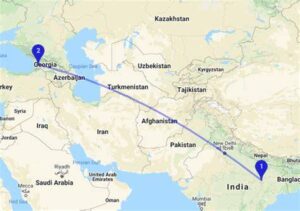
The distance between India and Georgia (New Delhi to Tbilisi) is approximately 3,500–4,000 kilometres, with an average flight duration of around 5 to 6 hours. Flights are generally affordable, making travel convenient for students.
Additionally, Georgia has flexible immigration policies, ensuring a smooth and hassle-free transition for students.
7. Growing Popularity Among International Students
In recent years, Georgia has seen a steady rise in the number of international students, particularly from India, enrolling in medical programs.
This growth reflects the country’s reputation for quality education, affordability, global recognition, and strong clinical exposure, making it a preferred destination for aspiring doctors
8. Georgia as a Hub for Medical Education and Innovation
Georgia is becoming a recognised centre for medical education and healthcare development. The country is continuously improving its healthcare infrastructure, hospitals, and medical training systems.
For students, this means exposure to modern medical practices, updated curriculum, and evolving healthcare technologies, helping them stay competitive in the global medical field.